
Benefits.
Why a roleplaying session is a useful tool for management training and conflict resolution work.
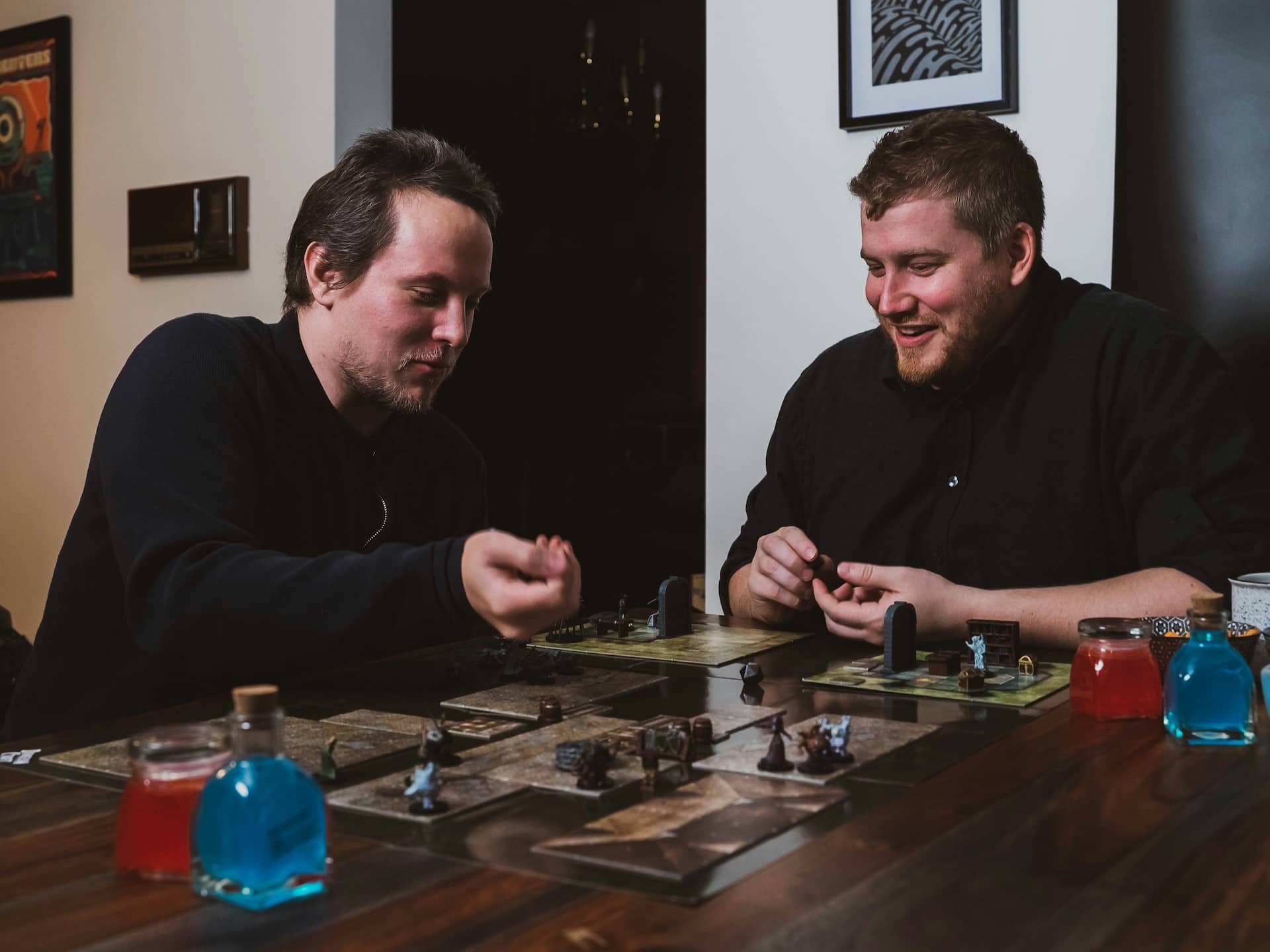
Most team exercises ask people to talk about how they work together. A roleplaying session lets them do it. The group is given a shared problem and a story to move through, and the way they communicate, disagree, and decide shows up in play.
Facilitators and trainers can use what comes out of the session as material for the conversation afterwards, with no real work on the line.
Everyone is equal at the table
Inside a game, the manager and the new starter are both just a character with a skill and a problem to solve. Nobody's job title carries weight. Quiet people get heard, and people who usually lead find out what it's like to follow.
A place with no stakes
Nothing that happens in a session touches a real project, a real client, or a real review. That makes it a low-pressure way to watch how people actually work together: who takes charge, who waits, who asks questions, and who quietly fixes things.
Disagreeing through a character
Players argue and negotiate as their characters, so the disagreement stays in the story. The real-world history between two colleagues is left outside. People can practise pushing back, and holding their ground, without it becoming personal.
Failing without fallout
Plans go wrong in games, and the table laughs and regroups. Teams see that a mistake can be survived, talked about, and learned from. That attitude tends to follow people back to the office.
Stepping into another point of view
Playing someone with different goals, fears, and loyalties means arguing their case from the inside. It builds the habit of asking why someone sees a situation differently, which is where most workplace conflicts start to ease.
Rapport and psychological safety
When a group makes shared decisions and depends on each other to get through a tense scene, trust builds quickly. People who barely spoke before the session often leave comfortable disagreeing with each other.
Using each person's strengths
A scenario only works if the group notices who is best at what and hands the job to that person. It's the same skill as delegation on a real project, practised where a wrong call costs nothing.
Solving problems without a template
The obstacles in a session don't have a standard fix. Colleagues have to improvise together instead of falling back on the usual workflow, which shows how flexible a team can be when it has to be.
It doesn't have to be goblins and dragons
The setting can be anything that suits the group. A team of space miners could be handed an impossible mission by a faceless corporation that won't answer questions or change the deadline. That's close enough to real working life to be recognisable, and far enough away that people can laugh at it and talk about it openly.
Fantasy, science fiction, mystery, or a setting built around a specific challenge the team is facing: the scenario is chosen to fit your participants and your goals.